The Role of Edible Insects in Reducing Global Food Waste
The concept of utilizing edible insects in human diets is gaining traction as societies seek sustainable solutions to pressing global issues, one of which is the extensive problem of food waste. According to the Food and Agriculture Organization of the United Nations, roughly one-third of the food produced worldwide is wasted. This staggering statistic not only reflects inefficiencies within food systems but also poses challenges for resource management and environmental conservation. The introduction of insects as a food resource offers a promising strategy to address these challenges.
Understanding Food Waste and Its Impact
The phenomenon of food waste involves the discarding of perfectly edible food at various points along the food supply chain. This chain includes stages such as agricultural production, post-harvest processing, distribution, retail, and consumer consumption. Each of these stages presents unique challenges that contribute to the cumulative loss of food. The implications of food waste extend beyond lost nutritional opportunities; they involve significant wastage of resources like water, energy, and arable land. Additionally, food waste exacerbates environmental problems by contributing to deforestation, biodiversity loss, and increased greenhouse gas emissions. Addressing food waste is integral to achieving sustainability goals and enhancing global food security.
Edible Insects as a Sustainable Alternative
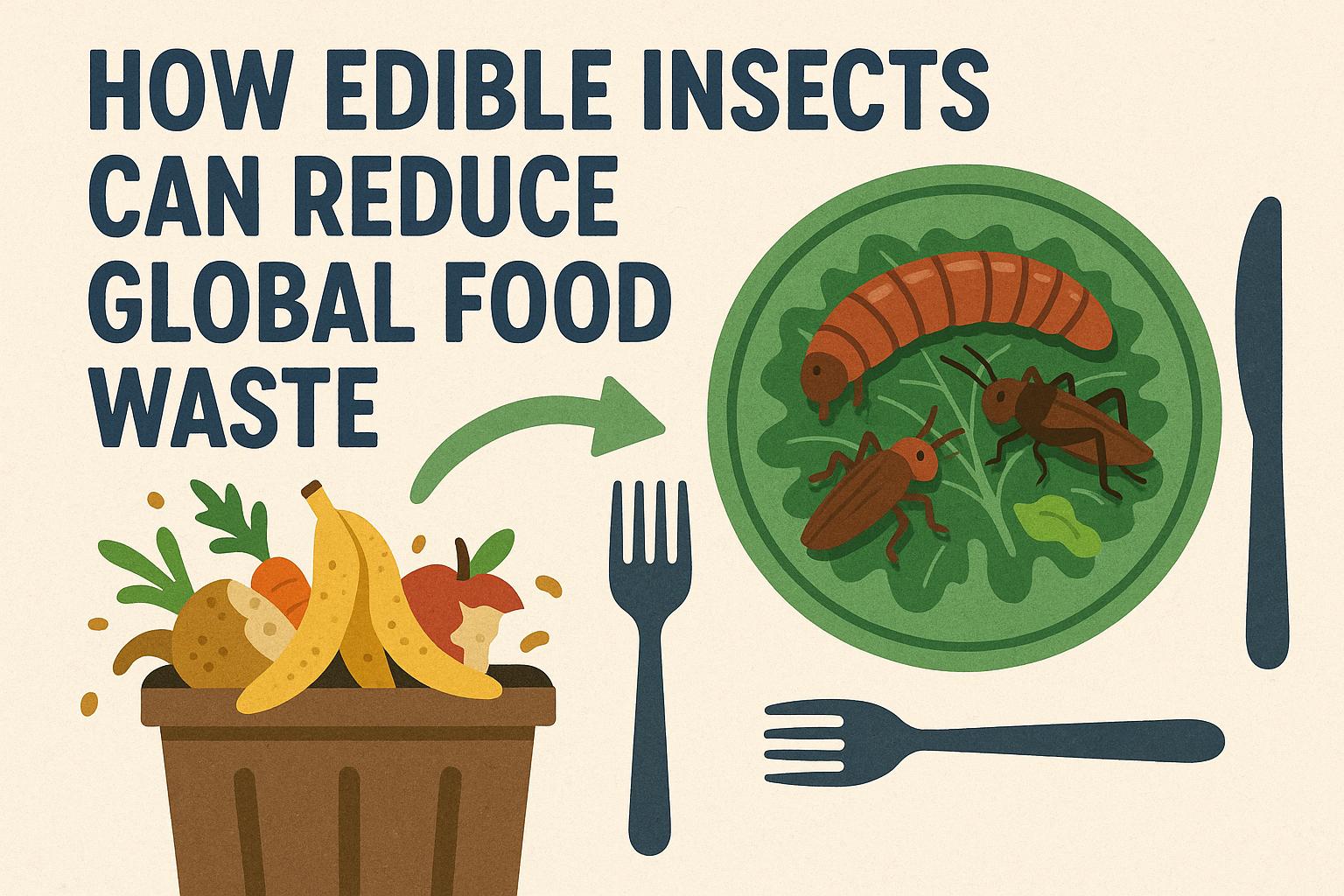
Insects represent a largely untapped resource that could be effectively integrated into existing food systems. Their capacity to be reared on organic waste products is one of their most compelling attributes. Unlike traditional livestock, which often requires significant feed resources and arable land, insects can thrive on a wide array of organic by-products, including food processing waste, agricultural residues, and even human food waste. In this way, they play a dual role, not only serving as a food source but also as a biological mechanism for recycling nutrients and reducing food waste.
Nutritional Value of Insects
Edible insects are remarkable for their nutrient density, offering protein, vitamins, and minerals that are essential for human health. This makes them a strong contender for supplementing or replacing conventional protein sources like meat and fish. For instance, mealworms have a protein content that rivals that of traditional sources, making them attractive alternatives in terms of nutritional value. Additionally, insects supply essential amino acids and micronutrients, contributing to diversified and balanced diets. Their nutritional profile not only supports individual health but also provides a viable solution to global nutritional deficiencies.
Environmental Benefits
The cultivation of insects for food holds distinct environmental advantages over more traditional forms of livestock farming. Insect farming is characterized by lower resource requirements; it demands less water, land, and feed. These efficiencies translate into reduced ecological footprints. Furthermore, insects emit fewer greenhouse gases compared to cattle and other livestock, helping mitigate the environmental impact associated with conventional animal agriculture. By producing less methane and other harmful emissions, insects contribute to combating climate change and preserving ecological balance.
Challenges and Considerations
Although the incorporation of insects into dietary habits offers distinct advantages, several challenges must be addressed to facilitate their mainstream acceptance. A primary hurdle is consumer perception and acceptance. Cultural attitudes towards insect consumption vary widely, and overcoming psychological barriers will require concerted educational efforts. Additionally, regulatory frameworks governing the production and sale of edible insects must be developed and standardized to ensure safety and consistency. The establishment of robust regulatory systems will facilitate trust and transparency in the insect food industry, encouraging greater adoption.
Insect farming practices also require standardization to ensure that they are safe, sustainable, and scalable. Research into best practices for farming different insect species is crucial, and these practices should align with existing sustainability and food safety criteria. This standardization will help create uniformity in production, allowing for the insect industry to expand successfully.
To gain more insight into the potential of edible insects, resources from organizations like the Food and Agriculture Organization or industry groups such as the Edible Insects Coalition provide valuable information on ongoing projects and research.
Conclusion
Integrating edible insects into the global food supply offers a novel and potentially transformative approach to addressing food waste. By converting waste into a high-value nutritional product, insects present an opportunity to enhance food security while minimizing environmental impacts. The reduced resource needs and lower greenhouse gas emissions associated with insect farming further underscore their sustainability credentials. However, realizing the full potential of insects as food requires overcoming existing barriers such as consumer acceptance and regulatory challenges. Continued investment in research, development, and public outreach is essential to integrate edible insects into mainstream dietary habits successfully, paving the way for a more sustainable and efficient global food system.