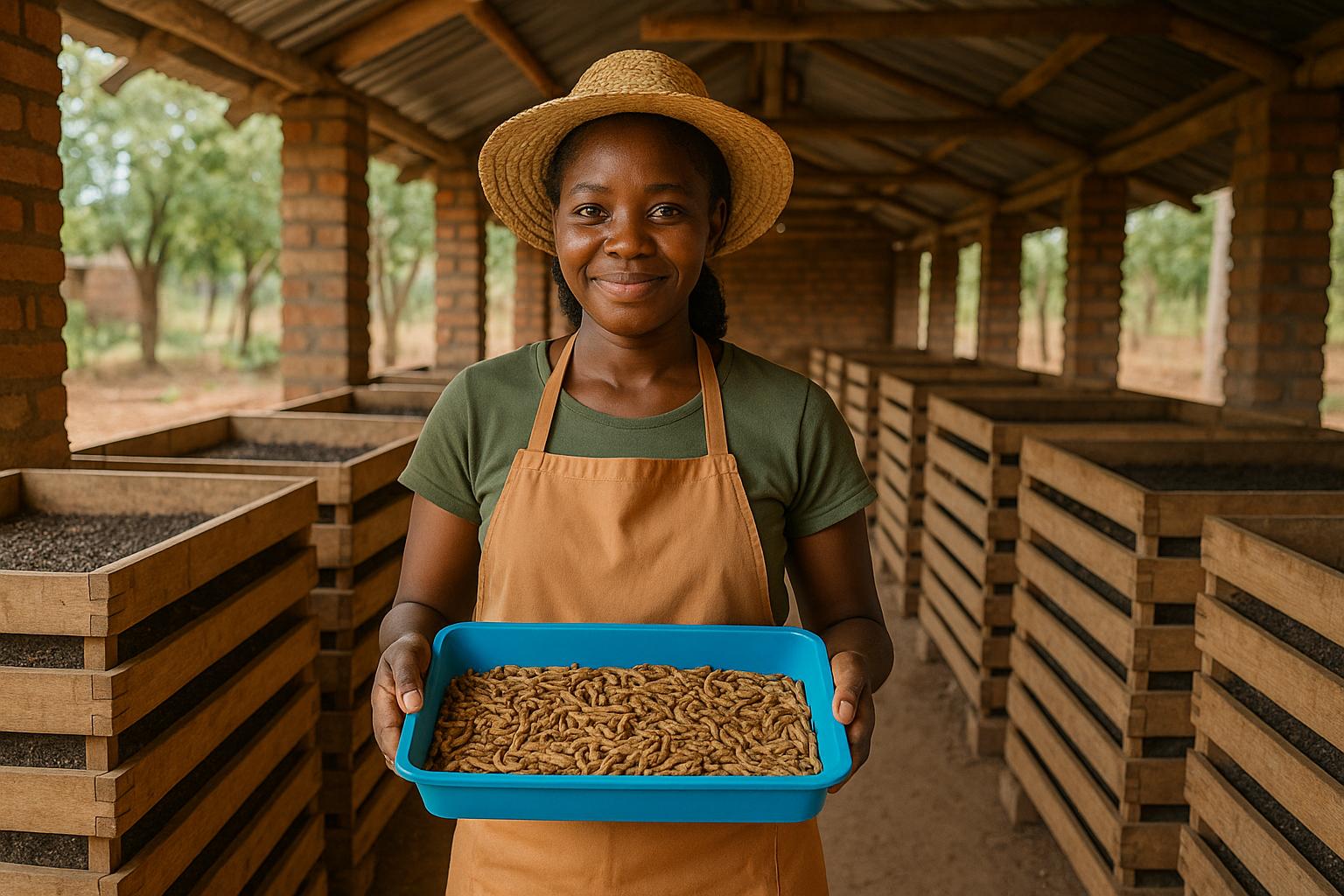
Insect Farming: An Innovative Job Creator in Rural Areas
Insect farming is emerging as a promising field that supports economic growth and job creation in rural communities. This innovative industry offers a sustainable and economically viable alternative, presenting numerous opportunities for rural development.
Understanding Insect Farming
Insect farming involves breeding insects for various purposes, such as animal feed, human consumption, and plant fertilizers. Among the most commonly farmed insects are crickets, mealworms, and black soldier fly larvae. These insects are highly efficient in converting feed into protein, making them a sustainable resource. As the world faces challenges related to food security and environmental sustainability, insect farming emerges as a notable solution that can address these issues while simultaneously fostering economic development.
Job Creation and Economic Benefits
Insect farming has a low barrier to entry, making it appealing to small-scale farmers and entrepreneurs in rural areas. Setting up an insect farm requires a relatively modest investment compared to conventional livestock farms. This affordability enables more individuals to enter the agricultural sector and stimulate local economies.
The industry creates an array of employment opportunities. Basic operational roles involve the daily management and maintenance of insect colonies, ensuring optimal conditions for growth and productivity. With a structured and efficient approach to farming practices, insect farmers can yield significant outputs, which further promotes economic growth.
In addition to hands-on farming roles, the sector generates work in processing, distribution, and research. Processing insects for various uses, such as preparing them for human consumption or animal feed, requires careful techniques to ensure safety and quality. Meanwhile, the distribution networks that transport these products to markets also necessitate roles in logistics and supply chain management.
Furthermore, the insect farming industry can create ancillary jobs in equipment manufacturing, logistics, and marketing, among others. As farms expand and modernize, there is increasing demand for specialized equipment designed for insect rearing and processing. This need, in turn, supports local manufacturing businesses and suppliers.
Skill Development and Training
Insect farming necessitates specific skills and knowledge, prompting the need for training programs and workshops. This situation can lead to the establishment of educational opportunities in rural areas, equipping residents with valuable skills that can enhance their employability.
Comprehensive training covers essential areas such as breeding techniques, insect husbandry, biosecurity measures, and packaging and marketing strategies. Mastery of breeding techniques ensures that farmers can maintain healthy insect populations with high productivity, while knowledge of insect husbandry involves understanding the nutritional and environmental needs of the insects to maximize growth and yield. Implementing biosecurity measures is crucial for preventing disease outbreaks within insect colonies and ensuring the sustainability of farming enterprises. Additionally, learning effective packaging and marketing strategies enables farmers to present their products attractively in the marketplace, reaching a wider audience and maximizing sales potential.
By acquiring these skills, individuals are better prepared to enter the workforce or start their own ventures in this expanding field. Moreover, the opportunity to gain expertise in a rapidly growing industry can lead to further innovation and development within rural areas.
Environmental and Economic Sustainability
The environmental benefits of insect farming cannot be overstated. Insects require less land, water, and feed compared to traditional livestock, making the practice more environmentally sustainable. This sustainable approach not only contributes to reducing the ecological footprint of food production but also aligns with the global shift toward sustainable agricultural practices.
For rural areas, which often face constraints on available resources, the ability to produce a high yield with minimal inputs represents a significant advantage. Insect farming can integrate well with existing agricultural operations, utilizing waste products as feed and reducing the overall environmental impact.
Economically, insect farming can reduce the dependency of rural communities on unstable markets or climatic conditions that affect conventional farming. Insect facilities can be managed indoors, offering control over environmental conditions such as temperature and humidity, thereby minimizing the impact of extreme weather or seasonal fluctuations.
The resilience and adaptability of insect farming can thus play a crucial role in stabilizing rural economies. The steady income provided by diversifying into insect farming allows communities to mitigate risks associated with traditional agricultural products, strengthening their financial foundations and encouraging further investment and development.
In addition, the growing interest in alternative protein sources among consumers and businesses worldwide presents new markets for insect-based products. This demand opens up international trade opportunities, providing rural insect farmers with expanded markets for their products.
For more insights into how insect farming can benefit rural communities, consider exploring detailed case studies and industry reports from credible sources. This evolving sector continues to show promise as a sustainable and viable economic engine for rural development and job creation.
To learn more about the potential of insect farming, you can visit [this resource](#).